
Personal leave & sick leave — what's the difference?
Employees hear "sick leave," "carer's leave" and "personal leave" used almost interchangeably, and often assume they're separate entitlements. Legally, they're mostly the same bucket — but there are a few distinctions worth knowing.
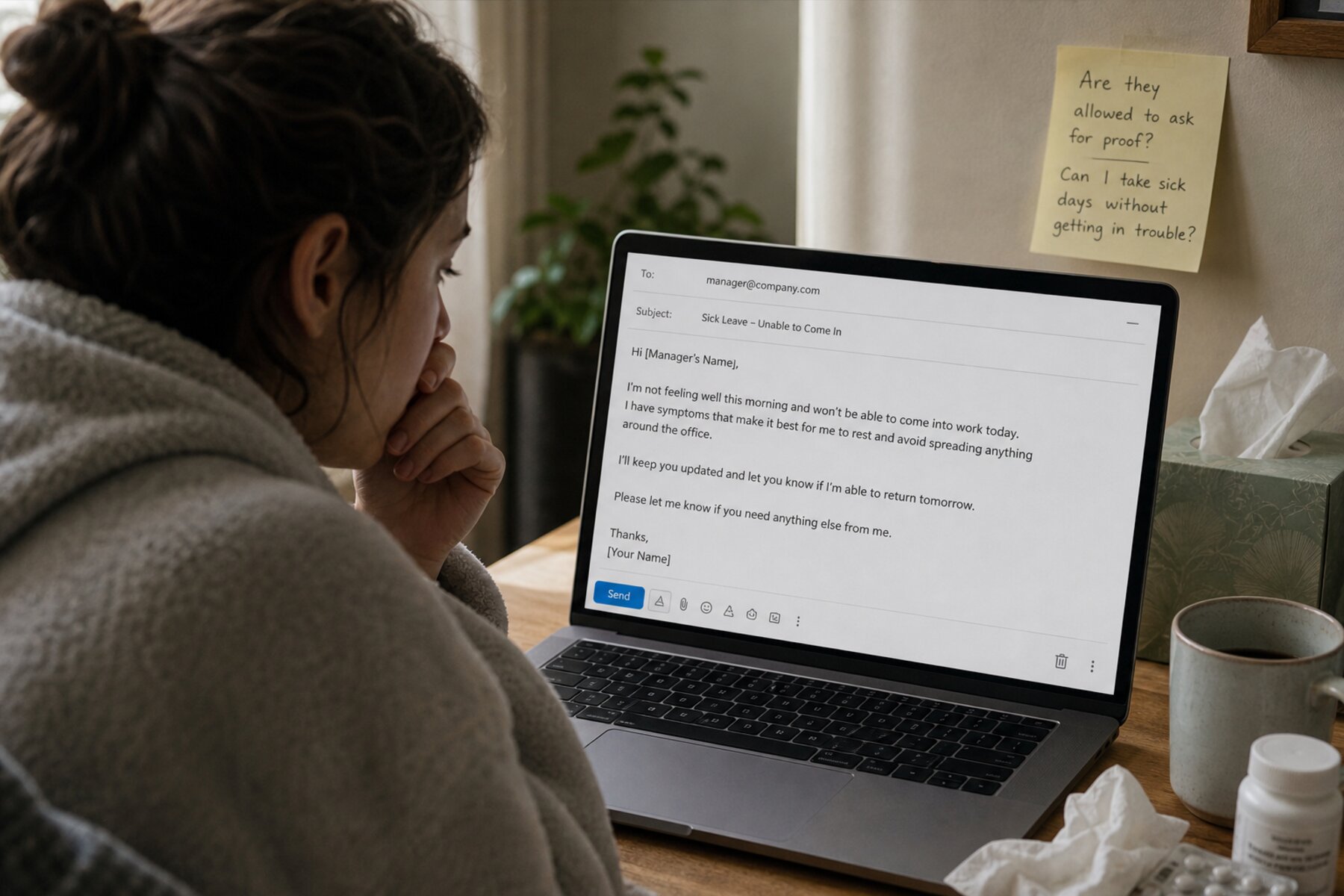
One entitlement, two uses, and a few different names
"Sick leave" is the term most people grew up using. "Personal leave" is the term the law actually uses. In Australia, under the National Employment Standards, they're largely the same entitlement — the confusion just comes from everyday language not matching legal terminology.
The short answer
Personal leave is the umbrella entitlement. It covers two different reasons you might take it:
- Sick leave — when you're personally unwell or injured; and
- Carer's leave — when you need to care for or support an immediate family or household member who is sick, injured, or facing an unexpected emergency.
Both come out of the same bank of days — there isn't a separate pool for "sick" days and "carer's" days. If you use a day to care for a family member, it's drawn from the same balance as if you'd used it for your own illness.
How much you get
Full-time employees are entitled to 10 days of paid personal/carer's leave per year, with part-time employees receiving a pro-rata amount based on their ordinary hours. Unused personal leave carries over from year to year — it doesn't reset or expire, so a genuine balance can build up over time.
Casual employees aren't entitled to paid personal/carer's leave, but they are entitled to 2 days of unpaid carer's leave per occasion when they need it.
What about compassionate or bereavement leave?
This is a genuinely separate entitlement, not part of your personal leave balance. All employees — including casuals — are entitled to 2 days of compassionate leave each time they need it, for events like the death or life-threatening illness of an immediate family or household member, a stillbirth, or a miscarriage. For full-time and part-time employees, this leave is paid; for casuals, it's unpaid. Because it's a separate entitlement, taking compassionate leave doesn't use up your personal leave balance.
Why the distinction sometimes matters
Employers sometimes get this wrong — treating a request for carer's leave as though it needs to be "sick leave" instead, or assuming an employee has run out of leave when they've simply used it for a family member rather than themselves. If you're ever told you can't take carer's leave because it's "not your own illness," that's usually a misunderstanding of how the entitlement works, not a valid reason to refuse it.
Key takeaway
"Sick leave" and "carer's leave" are two uses of the same personal leave entitlement — 10 days a year for full-time employees, pro-rata for part-time, and it accumulates rather than resetting. Compassionate leave is separate again. If your employer is disputing how you've used your leave, it's worth having it checked.
This article is general information only and does not constitute legal advice. Leave entitlements can vary depending on your award, agreement or contract — speak with one of our employment lawyers if you have a specific query.
← Back to Employment Law ExplainedLeave entitlements being disputed?
Every enquiry is strictly confidential, your first consultation is free, and we'll tell you honestly what your options are.